fishing store
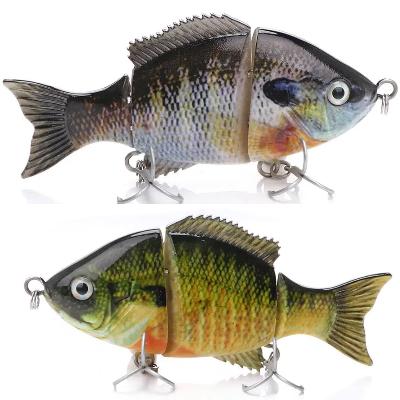
Panfish Jointed style hard bait

Panfish Jointed style hard bait

$ 7.49

3 3/4 inch 3/4 ounce (20 gram) Panfish style 2 segment jointed hard bait casting or trolling
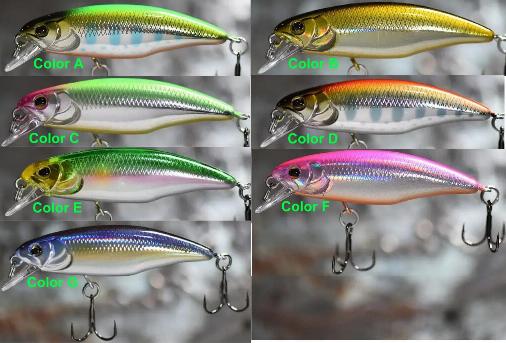
2 inch 1/8 ounce crankbait med diver

2 inch 1/8 ounce crankbait med diver

$ 2.49

Trolled or cast to your favorite target species these little guys work. 2 inch 1/8 oz crankbaits
Lucky Joes Stainless Steel Treble Hooks

Lucky Joes Stainless Steel Treble Hooks

$ 6.49

Lucky Joes Stainless steel welded treble hooks 420 stainless steel model 7731 style hooks

Welcome To the Tips & Tricks

You may Browse or Search in our database for a Tips & Tricks
or
You may Add your own Tip & Trick. Just click on the "Add Your Tip&Trick" button on the left and fill in the form.
THANK YOU!

fishing wanted

 Aug 7, 2007; 10:55PM
 Category:  Sportfishing Charters
 Name for Contacts:  Bobby Wilson Fishing Guide Service
 Phone:  770 328 2106
 City:  Atlanta, Columbus, Newnan
 State:  Ga
 Country:  USA
 Description:  Fishing Guide Service, Seasons: January thru December, Monday thru Sunday, Guide Fishing Catch: Stripers, Hybrids, Crappies, Bass, Catfish. 6 or 8 Fishing Hours. Georgia Lakes, All Inclusive Fishing Packages. Fishing Equipment Included: Rods, Reels, Live Bait, Artificial Bait, Fishing Orientation, Guides Assistance. Accepting Reservations Now. www.WestpointLakeFishingGuides.com

fishing photo contest

w i n n e r
w i n n e r
Kids Only Fish Photo Contest
Kids 12 and under only in this contest A free tackle package to the photo with the most votes. Contest ends Jan 1, 2012
trenton smith3lbmackeral
Click the image for full story
trenton smith, 5
he huff and puffed to get this one to the boat
1124 vote(s)

fishing tips and tricks

 May 19, 2003; 09:01AM - Circle Hooks for Billfish
 Category:  Trolling techniques
 Author Name:  Carlos Morales
Tip&Trick Description 1: What are “circle hooks”? To a fisherman seeing one for the first time you kind of wonder why anyone would use them or took time to invent them. They are similar in size to the more common “J” shaped hook but the opening is smaller and the barb points toward the body of the hook forming a circular shape, hence their name. At first glance it would appear fish would seldom be caught with circle hooks because the barb points the wrong way and the smaller than usual opening would difficult hooking anything.

Surprise, surprise, first impressions are wrong. Depending which study an angler consults, circle hooks have been shown to be as effective or more effective than “J” hooks for catching all types of fish including billfish. Some studies say fishermen catch 60% more fish, others 100% more fish with circle hooks than with “J” hooks. Catching more fish is a bonus but the real advantage of circle hooks is that they are designed to hook a fish in the lip or corner of the mouth and this happens about 95% of the time, preventing “deep hooking” and “foul hooking”. Removing a circle hook is fast and easy, take a pair of pliers and rotate the hook out of the mouth.

A “J” hook works by attaching itself wherever soft tissue is available. Normally, as soon as a fish bites, the first thing an angler does is “set the hook” by swiftly pulling the rod up and reeling in some line. This violent maneuver guarantees (anglers wish) that the barb of the hook will penetrate some soft tissue inside the mouth thus hooking the fish. Some fish, like billfish, have bony mouths so when the “J” hook tries to find purchase it just slides along and it either pops out of the mouth with the bait or attaches to the the upper palate, throat, pharynx, oesophagus or in the stomach. Anglers who practice catch and release know deep hook injuries, caused by any type of hook, are often mortal due to bleeding and that the hook sometimes is left inside the fish since its so deep there is no way to remove it without killing the fish. This is not a problem for the angler fishing for tasty, sought after fish like Dorado (dolphin), flounder, mangrove snapper, redfish, grouper, etc., since the whole point of going fishing is catching fish to eat.

Here is where circle hooks come in. They have been around for years and were adopted in the late 1970’s for use by longline commercial fishing boats because not only did fish hook themselves but also studies showed they were 85% more effective than “J” hooks and the hooked fish were alive when the longline was retrieved. It is ironic that recreational anglers, to preserve fish, have recently adopted commercial fishing hooks known and used for their ability to catch large numbers of fish.

We did say fish hooked themselves and we are not joking. When fishing using circle hooks and a fish takes the bait, do not set the hook! Wait. Count out one Mississippi, two Mississippi, etc., meditate about why there are no pregnant ladybugs, speculate on the price of bananas on Mars, just don’t set the hook! As the fish swims away the line becomes taut allowing the hook to rotate inside the fish’s mouth and lodge itself in the corner of the mouth. When the rod is flexed and the line taut that means the fish is hooked. Patience is very important because if the angler tries to set a circle hook the same way as a “J” hook, more often than not it will just be pulled out of the mouth of the fish. After a bite a mate on our boats grabs the rod but doesn’t do anything until the billfish swims away pulling the line taut and bending the rod, then he counts to five and “tests” whether the hook has been set by reeling in some line. This technique usually works very well.

If a “self-hooking hook” was not good enough, circle hooks have other advantages. Once hooked, billfish tend to leap and violently shake their head side to side to try and loose the hook. It looks spectacular and anglers love it but “J” hooks are sometimes dislodged this way. The circle hooks round shape and the direction of the barb helps to prevent dislodgement so fish don’t de-hook as much when doing their aerial stunts. Another great advantage is that humans hook themselves less in the hand, ear and/or other body parts and clothes with circle hooks because the barb points toward the body of the hook.

Not all circle hooks are created equal though. Besides “normal circle hooks” there are “offset circle hooks” whose barb does not point to the body of the hook but opens up, similar to a “J” hook’s. Depending on the degree that the barb is offset, 4 to 15 degrees, they become about as effective as “J” hooks at deep hooking as in their ability to catch fish. Like “J” hooks, “offset circle hooks” also cause more foul hooking of fish. Foul hooking means hooking a fish by the eye, gills, etc. Billfish depend on their eyesight to hunt and catch their prey so an eye wound seriously diminishes a billfish’s ability to feed and damaging the gills hampers the billfish’s survivability. Some circle hooks are made out of stainless steel and will not degrade with time so if a fish is lost with a stainless steel hook in it, that hook will be in the fish forever.

In Guatemala “catch and release” for all billfish is the law. Since it’s beginning our company has adopted a circle hook only policy for bill fishing and releasing the fish unharmed is a very important goal. Guatemala has the best sailfishing in the world and we do our best to keep it that way.

Happy fishing and tight lines!!

fishing tips and tricks

 May 13, 2019; 08:07PM - OCEAN-TAMER Marine Grade Bean Bags
 Category:  Boats
 Price:  $79.95 - $139.95
 Name for Contacts:  Frank Abruzzino
 Phone:  (941) 776-1133
 City:  Palmetto
 State:  Florda
 Country:  usa
OCEAN-TAMER Marine Grade Bean Bags Description 1: Are you tired of the pounding and fatigue on your
body caused by a rough boat ride? Do you hate
slowing down and getting bounced around in rough
sea conditions? Now with an OCEAN-TAMER Marine
Grade Bean Bag you can enjoy a more relaxing and
comfortable ride and spend more time on the water.
Every OCEAN-TAMER product is 100% marine grade and
built to last right here in the USA. These marine
bean bags have been tournament tested and approved
by professional offshore fishermen all over the
country. With our vast color selection, styles, and
sizes you are sure to find the right marine bean
bags to fit your boating and fishing needs. Come
visit our user friendly website and customize yours
today.

WWW.OCEAN-TAMER.COM

fishing reports

 Oct 17, 2011; 12:59PM - Cabo Bite Report
 Category:  Mexico Cabo San Lucas
 Author Name:  George Landrum


FLY HOOKER SPORTFISHING
Captain George Landrum
gmlandrum@hotmail.com
www.flyhooker.com
http://captgeo.wordpress.com/
Cabo Fish Report
Oct. 10-16, 2011

WEATHER: As almost always happens at this point in the year, the temperatures dropped this week. I am not sure why, but the middle of October almost always sees this happen, one of the many reasons we look forward to it. Our early morning averages dropped from 83 degrees to 78 degrees while the daytime highs dropped from 100 degrees to the mid 90's. We saw no rain this week but there were a few clouds in the sky and we dis have some days in the middle of the week when the afternoon breeze picked up, from the northwest early in the week and from the southeast at the end of the week.
WATER: Water conditions were wonderful with the Sea of Cortez showing 87-88 degrees almost everywhere we went, from up around Los Frailles all the way to outside of Cabo. On the Pacific side it was a bit cooler with 84-85 degree water near shore and warmer 86-87 degree water across the San Jaime Bank. With only slight winds almost every day was smooth, and the water was a very deep blue color.
BAIT: Caballito, Mullet and Sardines were the live bait available with the bigger baits at the usual $3 each and Sardinas in Cabo were $25 a small scoop.
FISHING:
BILLFISH: My apologies as I have made an embarrassing mistake on the first draft of my report and listed the fish caught in the Los Cabos Billfish Tournament from 2010 instead of from 2011. I did not fish this tournament and apparently brought up the stats from last year and incorporated them into this years data. Now this is the correct information: Two tournaments over 5 days of fishing with a total of 101 teams with 264 total fishing days. There were a total of 106 Billfish caught and only two of them were over 300 pounds, one was a 503 pound Blue Marlin and the other was a 408 pound Black Marlin. As an average this was 1 billfish per team. Boats that were charter fishing did very well on Striped Marlin and on Sailfish, but the tournament boats were looking for the larger species, therefore the stats are a little skewed if you look at them for an idea of overall bill fishing success.

YELLOWFIN TUNA: The interesting thing about the tuna this week was during the second tournament there were more large fish caught than during the first tournament, but it was tuna instead of marlin! During the 2 day tournament there was a 204 pound Yellowfin taken and on the second day there was a 133, 181 and a 187 pound fish, more large Yellowfin than during the first tournament, even though there were some nice ones taken then as well. A few of the larger fish were caught by anglers fishing for big black marlin on the Gorda Banks, but there were plenty taken from schools found around the San Jaime Banks area as well. Regular charter boats had no problem putting their anglers on some good quality fishing this week, with most of them getting more than enough bite to keep coolers full!
DORADO: The Dorado bite this week was very steady on fish that ran in size from 8 pounds to 25 pounds. There were very few fish over that weight, even though the 2 day tournament had a category for Dorado, they had to meet the 30 pound minimum weight and there were no qualifying fish caught on the first day and only two caught on the second day. We were trying to catch bait early in the morning on both days of the two day tournament and on both days had Dorado swim into our underwater lights to feed on the sardines we were chumming with. We caught three of them on the first day and one on the second day, all before daylight! All the fleet boats fishing normal charters were coming in with riggers full of yellow flags for the Dorado they were catching.
WAHOO: There were not a lot of Wahoo flags flying this week even with the full moon but there were some nice fish caught. During the three day tournament each day saw a fish between 40 and 50 pounds brought to the scale, and there were more than that hooked up. The charter fleet did pretty good as well with fish in the same size range.
INSHORE: Very little inshore fishing change this week with most of the information mirroring last weeks and the week before. Mast Pangas were fishing the fantastic Dorado bite, there were some really good days when the Roosterfish were on with an average of 20 pounds in size. Plenty of Skipjack Tuna and a scattering of bottom fish rounded out the inshore action.

FISH RECIPE: My recipe has been taking too much space so if you want to see it, check out my wordpress blog a little later in the week, or subscribe to the blog and you will receive an email as soon as I post it.
NOTES: We have finally come to my favorite time of the year! The weather is perfect, the tournaments are happening and the fishing is just about as good as it can get! I have great expectations for the Western Outdoor News Tuna Tournament during the first part of November. With the size and the action on the Tuna we have been having the past few weeks it looks to be a great event with lots of fish and plenty of happy anglers! My fingers are crossed that the Bisbee Black and Blue Marlin Tournament that begins on Wednesday (I am fishing on my friends boat “Sporty Game”, follow the action on the Bisbee website and cheer us on!) and ends on Friday results in a few large Marlin being caught (of course, one of them will be for us!). My music is going to be updated this coming week and one of my main CD supplier is back visiting us, thanks to Mark Bailey I should have some more great selections to listen to, and relay to you!
Until next week, tight lines!
I will be posting more to my blog now http://captgeo.wordpress.com, please go to and subscribe, you will be sent a notice every time I post a new article. Please feel free to send suggestions or if you have any ideas for articles. Thanks George